This platform provides access to the latest information available on non-native species occurrences in Antarctica to inform the advice of the Committee for Environmental Protection (CEP) to the Antarctic Treaty Consultative Meeting (ATCM) on the state of the Antarctic environment (Article 12(1)j).
Non-native species introductions and establishment are having substantial and likely irreversible environmental impacts on Antarctic ecosystems and biodiversity. Non-native species, or species that live outside of their natural range, can spread inter-regionally (from outside the Antarctic) or intra-regionally (within the Antarctic). Inadvertent introductions may occur when propagules, such as seeds, soil, and invertebrate eggs, or whole organisms are transported to Antarctica. Propagules may be transferred in association with clothing and personal belongings of visitors, cargo, and fresh produce that have been transported to or within Antarctica by land vehicles, ships, or aircraft.
Currently, the Antarctic Peninsula region is the part of the Antarctic Treaty area where most non-native species have been recorded. While introductions to Antarctica are likely to increase, facilitated by climate change and increased human activity in the region, future rates of introduction and establishment could be reduced with the implementation of effective biosecurity mitigation and action. Despite some success in the eradication of non-native plants and insects inside buildings, some established invertebrate species have already begun to increase their distribution within Antarctica with largely unknown impacts upon native organisms and habitats. Further detailed information on the pathways, establishment, and movement of non-native species in Antarctica can be found on the Antarctic Environments Portal.
Occurrences of non-native species in Antarctica can be explored using this online platform where further information on status, observation date/s, and survival time is available for each occurrence.
The non-native species data underlying the platform was compiled by the SCAR Scientific Research Programme (SRP) ‘Integrated science to inform Antarctic and Southern Ocean Conservation’ (Ant-ICON), using journal articles, policy reports, and 115 records from the sub-Antarctic and Antarctic dataset of non-native species occurrences by Leihy et al. 2023, but where additional information (including spatial coordinates) was added. The web application was created by the UK Polar Data Centre and the BAS Mapping and Geographic Information Centre.
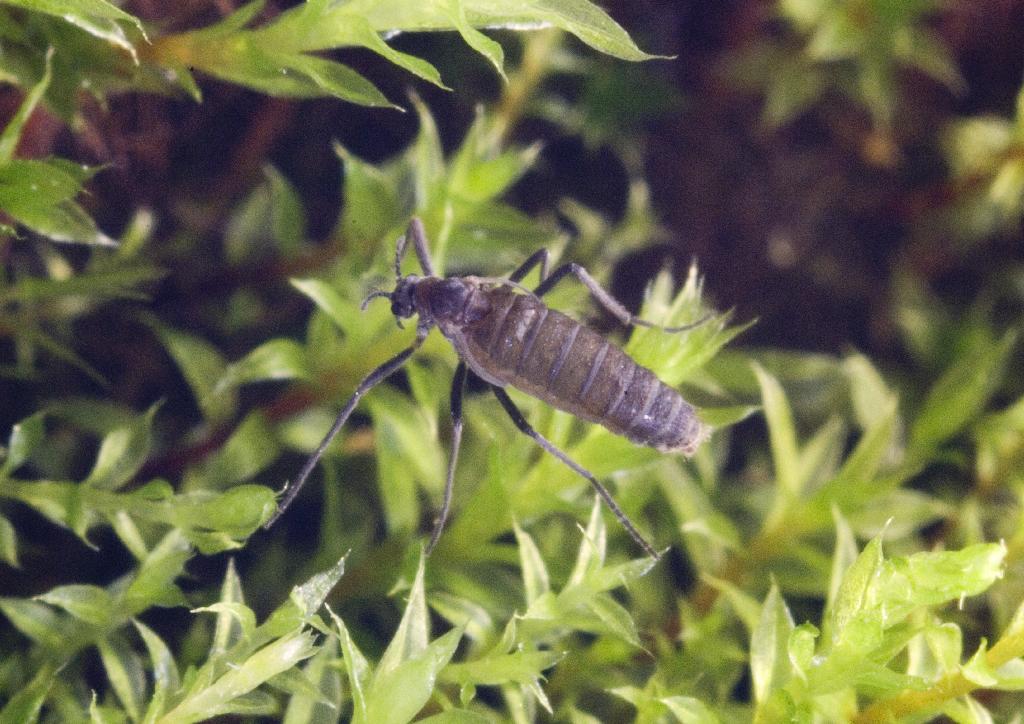
Image of Eretmoptera murphyi which was introduced from South Georgia and is spreading across Signy Island
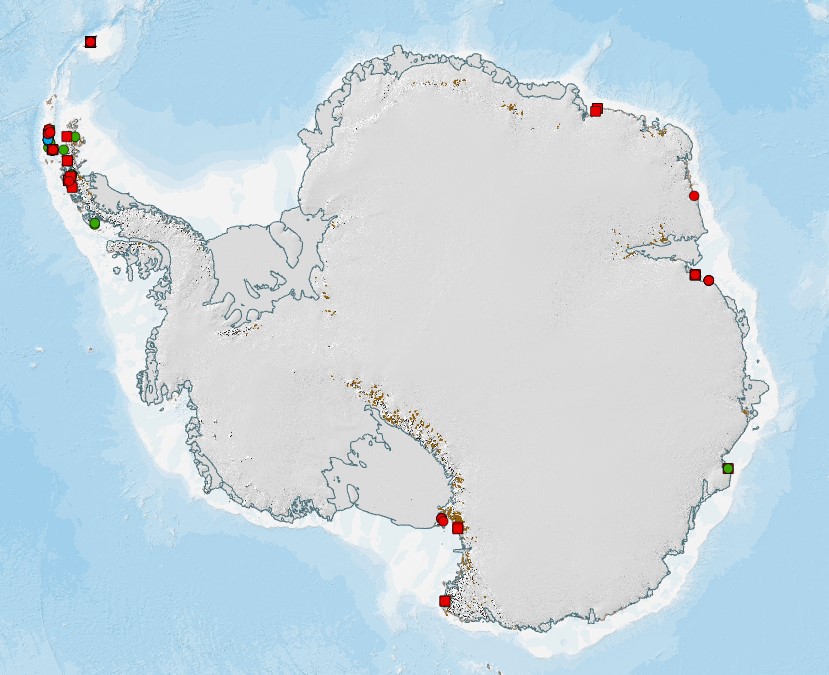
Map of Antarctica showing sites of species introductions